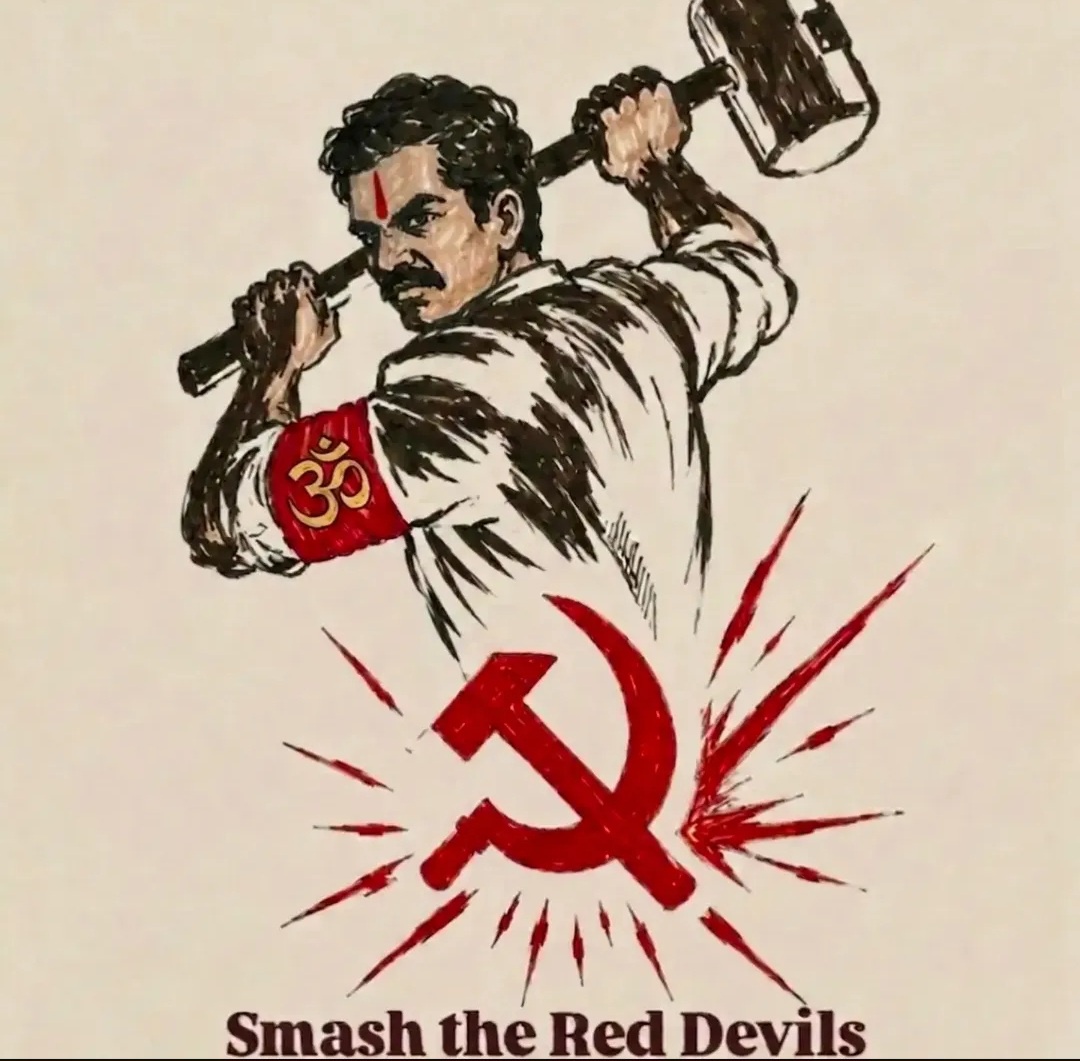
Its totally legal to dehumanize kanglus and commies in india
There is no law to stop us anonwa. Technically u can also abduct them and extract their organs and sell them. They are poor as fuck and cant put lawsuite even if ur found
generations are fake. Most Periods of events effects all age groups together, Like Pandemic. Popular media arbitrarily cuts generations into neat 20 year brackkets. There is no biological or historical reason why someone born in 1996 has a fundamentally different human experience than someone born in 1997, or Someone from 2012 than to Someone born in 2013.
Its For Individuals to have Vague personality to some events or some Coomercial products. By convincing an entire demographic that their defining trait is a shared love for a specific cartoon, console, or aesthetic, corporations creates Synthetic Community, We Should Not import retarded Gen system from Westoids.
>>1554
>>1553
>People within a span of a certain time period do experience certain culture and also certain limitations the same.
That Is true but by no means its fixed. the age gap or the bracket cant be fixed. the cultural gap isn't proportional to the age gap. A 5 years difference can feel larger than a 7 years difference if society changed rapidly during those years, We can never predict.
>>1555
>>1555
Say this 1989 born, 1994 born and 1999 born are three people, How Could you make labels Relevant to them in Jambudweepa. '89 is 11 and '94 is 6 years old in '00. So, when the '94 becomes 11 Y.O. Balaka then the '99 would be 6 Y.O. So the Middle one '94 gets to taste both culture of '89 and '99. So. in this new System of Bharata Pidhi, We must create a System where both '89 and '99 influences the Middle '94, it cant be Stand alone generation.
>>1557
>We must create a System where both '89 and '99 influences the Middle '94, it cant be Stand alone generation.
That is why i support making a label that is relevant to us specifically than this forced attempt at decade by the decade divide
I think Major historical points which affected us can be a good starting point.
I think the generation after 91 liberalisation is definitely different and so is the generation after 2008 but the most change were seen after the freebies of jio and covid pandemic i don't know how to put them all in one bracket. They were a significant events but it happened to quickly.
What say /pol/
India, she needs to focus on authority, beauty and architecture that display power.
you daal chawal socialist regime, nehrus socialist nehrivian license raj destroyed everything the british made. even worse stole business from hard working tatas.
india is shithole open defecating country since 2014.
why india needs authority and fascism you ask?
do those socialists care about the gareeb when they beg in the street, do they care when they carelessly spit gukta like a gawar?
they are sheep, mindlessly dumb and 76iq retards.
India needs to unite, arya dravida and kamarupa are sons of bharata and we need complete authority over pajeets if we need to make our bhangi nation similar to europe or japan.
Clearly bhim ka samvidhan and welfare schemes for sc/st ain't doing anything for india. Only private sector struggles and gets robbed.
lets unite oh brothers, Indr is with us and he wants us to create a fascist state with free markets where we rule with an iron fist
>>1550
because indians are superior race. some of us were not conquered by the mughals and still have that competency that wants our nation to be like europe and japan.
People like me(pahadis) are iq 130+ we know pajeets dont deserve democracy and we need to kill most of them left wing rapists
If u dont have competitive spirit go become lazy commie. Then blame why lundia is so behind in olympics
I feel like steppe ancestry could be native or super ancient. We know we share genetic similarities with europeans. But how can we be sure where 'steppe' comes from? Given how widespread steppe is in subcon i feel it is very ancient. Our population has always been so much larger than central asia that millenia of recorded invasions couldnt alter our genome. So i feel steppe likely arrived much before or during early IVC when our population had yet to grow so large. Rakhigarhi is but just one sample to guess the demographic makeup of entire ivc.
>>1302
Yeah haplo and autosomal dna dont always go hand in hand based on the volume and frequency alone. Founders effect can be a bitch, making any such conclusion is very difficult unless we absolutely had unbrekable evidence for it.
You are LostAnonymous(ID: mgSizQej)26/07/26(Sun)23:56:17No.1622[Reply]▶Replies: >>1624
The Protection of Bharat's Civilization is not some mere nationalism, it is a genuine Renaissance of all Human science and knowledge, and the future of the humanity in the space-era depends upon it.
To any self-haters here. I am not deluded. In fact, I was one of you. Being a self-hater came easy to me. I too believed India will never become Viksit Bharat due to some intrinsic defect. This may seem smart/self-aware to low IQ morons on the surface, but it couldn't be further from the truth. No human specimen is genetically, or sociologically incapable of industrial development. The universe and its laws is far more nuanced and complex than that. Sure, our journey to Viksit Bharat will take a long time, but it is up to you and I to contribute what little we can to make it happen sooner.
Some of you must have heard, that countless mainstream historians have reluctantly admitted, despite all propaganda to suppress Indian history, that Bharat was the foundation of most modern sciences as we know it. Our ancestors were the first to discover/invent things such as:
In Mathematics:
- Modern Numerals, Decimal system, Algebra, Trigonometry, Calculus, Formal Logic, and Programming Logic before computers were a thing.
In Physics:
-Atomic theory, the relativity of motion, and theories of light and matter
Medical:
- Rhinoplasty, Ophthalmology, Dentistry
Manufacturing:
- Damascus/Wootz Steel, Zinc Distillation Metallurgy, Stitched Ships, Catapults, Siege engines
These are just a mere handful, again, a mere handful of what major historians from around the world have only recently discovered to be traced to our ancestors.
Such inventions and discoveries could only occur in an institutionally strong, meticulously developed society. India was the Greece of the world, before Greece what it stood for European civilization. You may ask however, how come we are not like that today?
Bharat's fall from grace came from one core reason (among many others): A lack of Confidence.
Self-hate isn't confidence, hubris isn't confidence. Confidence is the genuine conviction out of indisputable evidence that you are capable of doing that which you can actually do.
The overly pessimistic self-hating sepoy, or the overly optimistic delulu, lacks confidence in Indian society. He lacks that confidence because of sheer ignorance. Confidence in one's civilization is born from the hard work and rigorous research to get a confident grasp of your people and their history, and their trajectory in the present.
The historical fall of Bharat's Civilization occurred precisely due to a lack of confidence. In the era where selfishness and hubris of kings, driven by a lack of confidence in their civilization yet confident in their own obscene wealth and power, plunged Bharat into cultural disunity. This unity laid as vulnerable to all foreign evildoers. Centuries upon centuries later, that lack of confidence has only become worse, exacerbated by the scarcity mindset of poverty of your fellow brother in Bharat. To him, civilization is second, and immediate gratification comes first. And who can blame him? He lacks confidence. Modern Bharat has yet to show some such as him.
However, we are on an upward path, though slow and uneven. It will take anons, from obscure origins, with hard work and luck from God, who have accomplished great things, to bring Bharat to its rightful, glorious place.
For my truly nationalist brothers, our history may be grand, but don't dwell on it too much. Dwell on the future. Historical Nationalism is empty, boasting of a past long gone. Futuristic, Innovate Nationalism, however, holds vast promises. That being said, keep studying our history. It is glorious and holds keys and clues to the future.
Greatness of our nation will come through individual greatness, so, we must waste our lives away. To those with potential, dont waste it. it is not that common.
The Indo-Aryan tribes never lost the land. The rivers still ran pure, the temples still stood unbreached, and the old bloodlines held the thrones, the councils, and the villages. No foreign creed had ever taken root. No imported egalitarianism had ever diluted the order of varna. The muzzies and the dalitoid residue had been cleared from the soil generations earlier removed, extinguished, gone. What remained was clean.
The cities of this Bharatvarsh rose in stone and timber according to the old measures. Varanasi’s ghats were not crowded with the unclean biomass only the pure aryans performed the rites at dawn. The air carried the smoke of pure ghee and sandalwood, never the stench of rotten corpses or alien prayer. Every village had its temple to the local form of the eternal gods
Indra still received the soma in the high places, Agni took the offerings in every household fire, Rudra watched the forests, Vishnu the order of the realm, and the Mothers guarded the thresholds. No minaret broke the skyline. No green flag flew. The call that rose at morning and evening was the Vedic chant, not the alien desert howl.
Family was the unbreakable unit. The grihastha’s house was ordered: father as head, mother as the living hearth, sons trained in the weapons and the scriptures of their gotra, daughters kept pure until the proper alliance was made. Joint families under one roof were the rule, not the exception. Elders were not warehoused they sat at the head of the hall and their word carried weight. Divorce was almost unknown. Illegitimacy was a stain wiped out by social death or worse. The blood stayed clean because the people kept it clean. Marriages were arranged within the proper circles.
The old hypergamous logic still governed who could take whose daughter. The result was visible in the faces tall, sharp-featured, light-eyed where the northern blood ran strongest, dark and powerful where the southern Aryan strains held, but nowhere the broken, mixed, or residual types that once cluttered the lower orders.
Culture was not a museum piece. It was lived. The epics were recited in the original meters at every festival. The Mahabharata and Ramayana were not “stories”; they were the operating code of the people. Boys learned the bow and the horse before they learned commerce. Girls learned the domestic rites, the songs, and the keeping of the sacred fire. Music was the raga system in its pure form; dance was classical, measured, and hierarchical. Sculpture still followed the shilpa shastras bodies ideal, proportions divine, no concession to the grotesque or the democratic.
Philosophy remained what it had always been: the pursuit of the real through the Vedas, the Upanishads, and the later systems that never apologized for hierarchy.
Moksha was for the qualified. The rest had their dharma in service, war, or craft according to birth.
The gods were many and they were local and they were real to the people who served them.
No one pretended all paths were equal. The tribal deities of the hills, the village gramadevatas, the great pan-Aryan forms all received their due. Conversion was not a concept apostasy was dealt with as the ancients dealt with it.
The land itself was sacred. Rivers were mothers. Mountains were the seats of the gods. Forests were not “resources” but the domain of Rudra and the yakshas. Agriculture followed the old calendar of seasons and sacrifices. The soil was not exhausted by the demands of endless population growth because the population had been kept within the limits the land and the blood could sustain.
In the cities the guilds still regulated craft and trade. The merchant vaishya knew his place and did not pretend to rule. The brahmin advised and performed the rites he did not beg. The kshatriya held the sword and the administration. Those who had once been outside the system were simply no longer present. Their absence was not mourned. The streets were orderly.
Crime of the chaotic kind was rare; the punishments for what remained were swift and public, as the Dharmashastras prescribed. Women walked without fear after dark because the men of the community still regarded the protection of their own as non-negotiable.
Technology existed electric light, railways, telegraph, later the early machines of the industrial age but it was subordinated to the older order rather than allowed to dissolve it.
The Indo-Aryan rulers of mordern era used the tools, they did not let the tools redefine the people. Schools taught Sanskrit first, the vernaculars second, and foreign tongues only as needed for external dealings.
History was not rewritten to flatter the defeated or the low. The Aryan expansion, the settling of the land, the establishment of the sacrificial order these were taught as the founding facts, without apology.
Festivals marked the year the great seasonal rites, the royal consecrations, the ancestor offerings. At every one the community stood in its ranks. The beauty was not soft. It was hierarchical, luminous, and severe. The temples glittered with gold and light. The faces in the processions were the faces of a people who had kept themselves. The family compounds were full of children who knew their lineage back twenty generations.
The gods were still here. The land was still theirs.
That was Bharatvarsh in the year under unbroken Indo-Aryan rule ordered, sacred, fertile, and clean.
>>1615
Uh, quick question, who will do the cleaning and stuff if you eliminate the dalits?
If you truly wish to have a rigid caste hierarchy, you would absolutely need the lower castes to do the undesirable work.
>The old hypergamous logic still governed who could take whose daughter. The result was visible in the faces tall, sharp-featured, light-eyed where the northern blood ran strongest, dark and powerful where the southern Aryan strains held, but nowhere the broken, mixed, or residual types that once cluttered the lower orders.
Marriages based on merit?
>Devapi brahminisation
Devapi's transition from a Kuru prince to a ritual priest (purohita) for his brother Shantanu reflects ancient social fluidity.
Key aspects of this transition include:
Exclusion from Royalty: Devapi was bypassed for the throne of Hastinapura due to a skin condition or leprosy.
Ascetic Retirement: He left for the forest to live as a hermit and engage in spiritual penance.
Priesthood and Rain: When a 12-year drought struck Shantanu's kingdom, Devapi acted as the ritual priest (hotar) to invoke the gods and bring rain.
Vedic and Puranic Precedent: Texts like the Rigveda (X.98) and later Puranic traditions use figures like Devapi Arstisena to illustrate that early spiritual roles and attainment of Brahmanhood were not strictly bound by rigid birth-based barriers.
>>1640
As late as the mid-9th century AD, there were still new "Brahmins" being formed from the tribal populations of Andhra, particularly the Boyas in the Eastern Chalukya kingdom of Vengi. These Boyas accepted Sanskritization and received land grants from kings as well as Brahmin gotras like Bharadvaja.