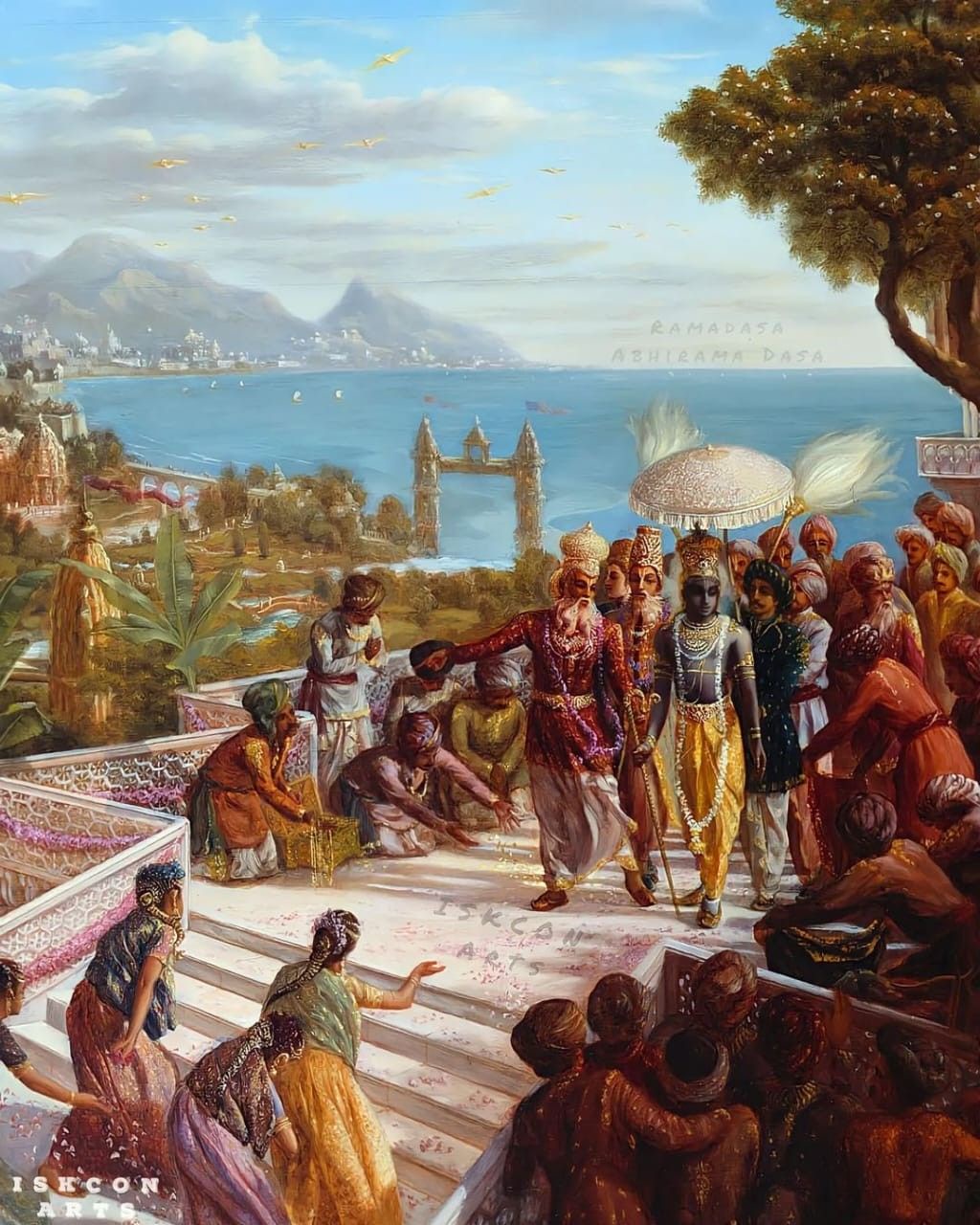
The Indo-Aryan tribes never lost the land. The rivers still ran pure, the temples still stood unbreached, and the old bloodlines held the thrones, the councils, and the villages. No foreign creed had ever taken root. No imported egalitarianism had ever diluted the order of varna. The muzzies and the dalitoid residue had been cleared from the soil generations earlier removed, extinguished, gone. What remained was clean.
The cities of this Bharatvarsh rose in stone and timber according to the old measures. Varanasi’s ghats were not crowded with the unclean biomass only the pure aryans performed the rites at dawn. The air carried the smoke of pure ghee and sandalwood, never the stench of rotten corpses or alien prayer. Every village had its temple to the local form of the eternal gods
Indra still received the soma in the high places, Agni took the offerings in every household fire, Rudra watched the forests, Vishnu the order of the realm, and the Mothers guarded the thresholds. No minaret broke the skyline. No green flag flew. The call that rose at morning and evening was the Vedic chant, not the alien desert howl.
Family was the unbreakable unit. The grihastha’s house was ordered: father as head, mother as the living hearth, sons trained in the weapons and the scriptures of their gotra, daughters kept pure until the proper alliance was made. Joint families under one roof were the rule, not the exception. Elders were not warehoused they sat at the head of the hall and their word carried weight. Divorce was almost unknown. Illegitimacy was a stain wiped out by social death or worse. The blood stayed clean because the people kept it clean. Marriages were arranged within the proper circles.
The old hypergamous logic still governed who could take whose daughter. The result was visible in the faces tall, sharp-featured, light-eyed where the northern blood ran strongest, dark and powerful where the southern Aryan strains held, but nowhere the broken, mixed, or residual types that once cluttered the lower orders.
Culture was not a museum piece. It was lived. The epics were recited in the original meters at every festival. The Mahabharata and Ramayana were not “stories”; they were the operating code of the people. Boys learned the bow and the horse before they learned commerce. Girls learned the domestic rites, the songs, and the keeping of the sacred fire. Music was the raga system in its pure form; dance was classical, measured, and hierarchical. Sculpture still followed the shilpa shastras bodies ideal, proportions divine, no concession to the grotesque or the democratic.
Philosophy remained what it had always been: the pursuit of the real through the Vedas, the Upanishads, and the later systems that never apologized for hierarchy.
Moksha was for the qualified. The rest had their dharma in service, war, or craft according to birth.
The gods were many and they were local and they were real to the people who served them.
No one pretended all paths were equal. The tribal deities of the hills, the village gramadevatas, the great pan-Aryan forms all received their due. Conversion was not a concept apostasy was dealt with as the ancients dealt with it.
The land itself was sacred. Rivers were mothers. Mountains were the seats of the gods. Forests were not “resources” but the domain of Rudra and the yakshas. Agriculture followed the old calendar of seasons and sacrifices. The soil was not exhausted by the demands of endless population growth because the population had been kept within the limits the land and the blood could sustain.
In the cities the guilds still regulated craft and trade. The merchant vaishya knew his place and did not pretend to rule. The brahmin advised and performed the rites he did not beg. The kshatriya held the sword and the administration. Those who had once been outside the system were simply no longer present. Their absence was not mourned. The streets were orderly.
Crime of the chaotic kind was rare; the punishments for what remained were swift and public, as the Dharmashastras prescribed. Women walked without fear after dark because the men of the community still regarded the protection of their own as non-negotiable.
Technology existed electric light, railways, telegraph, later the early machines of the industrial age but it was subordinated to the older order rather than allowed to dissolve it.
The Indo-Aryan rulers of mordern era used the tools, they did not let the tools redefine the people. Schools taught Sanskrit first, the vernaculars second, and foreign tongues only as needed for external dealings.
History was not rewritten to flatter the defeated or the low. The Aryan expansion, the settling of the land, the establishment of the sacrificial order these were taught as the founding facts, without apology.
Festivals marked the year the great seasonal rites, the royal consecrations, the ancestor offerings. At every one the community stood in its ranks. The beauty was not soft. It was hierarchical, luminous, and severe. The temples glittered with gold and light. The faces in the processions were the faces of a people who had kept themselves. The family compounds were full of children who knew their lineage back twenty generations.
The gods were still here. The land was still theirs.
That was Bharatvarsh in the year under unbroken Indo-Aryan rule ordered, sacred, fertile, and clean.
>>1615
Uh, quick question, who will do the cleaning and stuff if you eliminate the dalits?
If you truly wish to have a rigid caste hierarchy, you would absolutely need the lower castes to do the undesirable work.
>The old hypergamous logic still governed who could take whose daughter. The result was visible in the faces tall, sharp-featured, light-eyed where the northern blood ran strongest, dark and powerful where the southern Aryan strains held, but nowhere the broken, mixed, or residual types that once cluttered the lower orders.
Marriages based on merit?