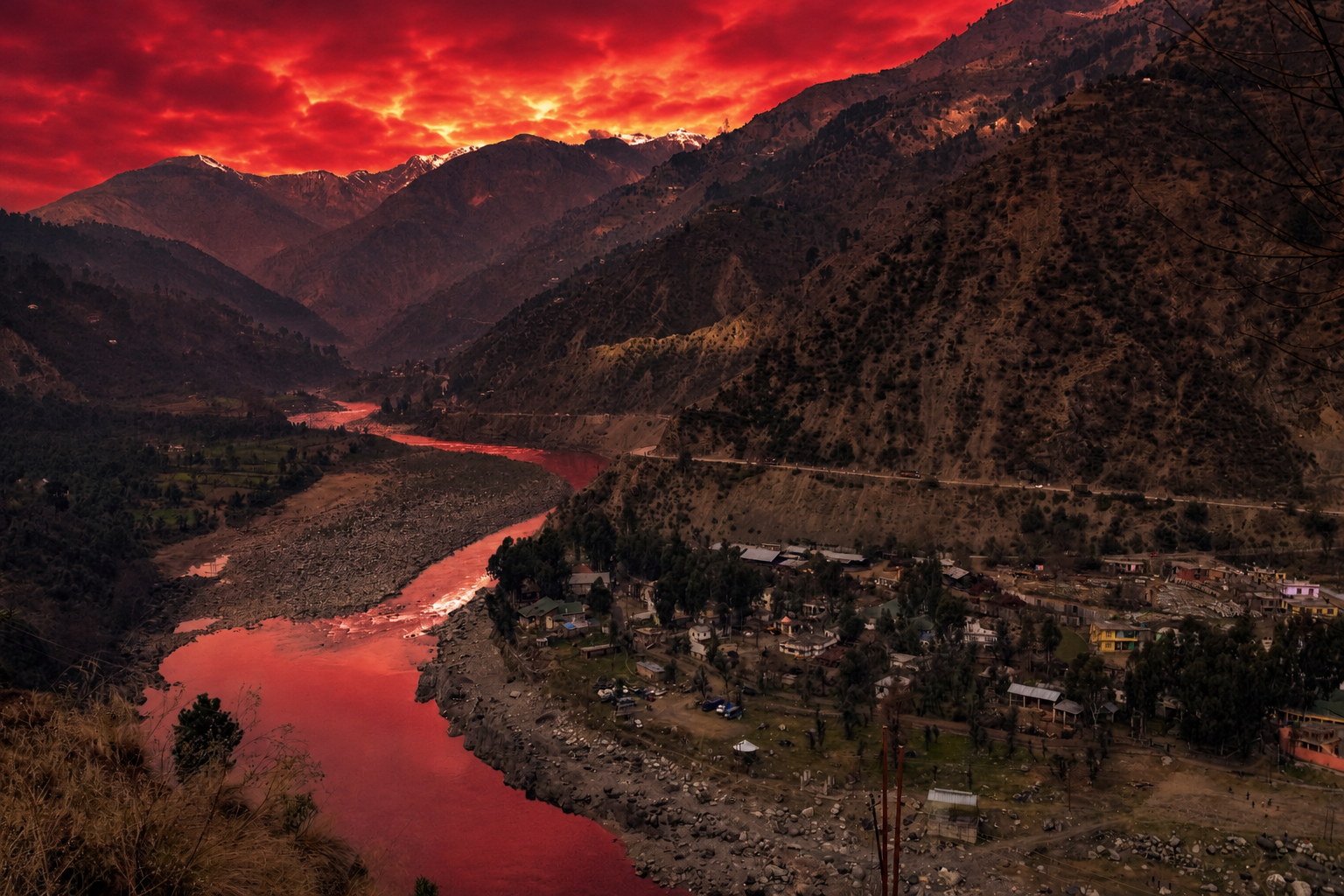
>December 2026 (Kiru & Pakal Dul)
India gains the baseline infrastructure to delay or pinch river flows during Pakistan's critical sowing seasons.
>July 2029 (Chenab-Beas Link):
India hits the ultimate deadline to physically divert the water out of its natural path, permanently cutting the supply.
>2032 (Bursar & Sawalkot):
India achieves 100% airtight, absolute structural chokehold capacity over the entire Indus water basin.
>By December 2026, India will finish building two massive water projects, called Pakal Dul and Kiru, on a major river that flows directly into Pakistan.>In the past, India let this river flow naturally across the border because they did not have the infrastructure to stop or store the water.>These new projects act like giant walls that can hold back vast amounts of water, effectively giving India a master water tap that it can turn on, turn off, or slow down at will.>This creates a serious challenge for Pakistan because its farmers rely on steady, predictable amounts of river water at very specific times of the year to plant vital crops like wheat and rice.>If India decides to fill its new reservoirs or restrict the river flow during those exact planting weeks, Pakistani farmers will face severe water shortages.>This sudden disruption can lead to massive crop failures, food shortages, and intense economic trouble across the country.Ultimately, this new infrastructure gives India a massive strategic advantage without using any military force.>By gaining the physical ability to control the speed and volume of the river, India can directly impact Pakistan's food supply and economy.>This transforms water control into a powerful tool of political leverage, altering the balance of power between the two nations simply through engineering.
It truly, is OWARI DA
>>1217
They are afraid that if Modi stays in the power, pakistan will lose its lifeline for good and if pakistan refuses to do continued warfare, usa will end up choking its resources, notice anon, notice