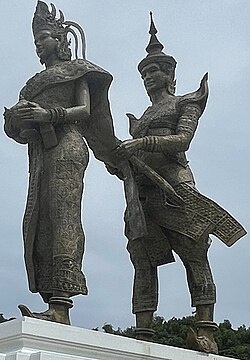
>Numerous historical sources and regional folklores refer to the arrival of the merchant Brahmin Kaundinya from India and his subsequent marriage to the Nāga princess Soma, an event traditionally associated with the founding of the ancient Funan kingdom (Cambodia) in Southeast Asia>As per the legends, an Indian merchant ship was attacked by the pirates led by Soma, daughter of the chieftain of the local Nāga clan. The merchants led by Kaundinya fought back and fended off the attackers but the ship had been damaged and was beached for repairs. The Indians were wary of a second attack but Princess Soma was impressed by Kaundinya's bravery and proposed marriage, which was accepted as they had by then fallen in love.>The union led to the foundation of the House which would rule Funan for many generations and the royal legitimacy of the dynasty was acquired through the female line (i.e. the matrilineal lineage) in the kingdom.
>Newly discovered DNA evidence, suggest there is some truth to the Khmer creation mythology, DNA sample taken from a protohistoric individual from the Wat Komnou cemetery at the Angkor Borei site in Cambodia contains substantial level of South Asian admixture>Radiocarbon dating result on the human bone (95% confidence interval is 78–234 calCE) indicate that this individual lived during the early period of Funan.>The origin of the name Kaundinya, which is not usually a common first name in India but a gotra (i.e. derived from ancestors by the Brahmins and gurus by other classes) of a group of Brahmins who lived on the eastern coastline of India especially along the Odisha-Andhra-Tamil coastline.>The links with Kalinga are also noted from the copper plate land grants given by the rulers of Kalinga to Kaundinya Brahmins who lived in the Mahendragiri region of Ganjam with the most notable one being the Ragolu inscription copper plate grant issued by the ruler Nandaprabhanjanavarman of the Pitrbhakta dynasty>the Shaivite customs mentioned in the Chinese work History of the Southern Dynasties during the reign of Kaundinya's descendant Jayavarman Kaundinya with regards to Mount Mo-tan in Funan, bearing affinity with the early Saivism and its relation to Mahendragiri mountain which was the prevalent religion during the reign of different dynasties of Kalinga
>>84000
The more you read history the more you will understand that Brahmins were highly cosmopolitan people, they spread everywhere, did all sorts of things, they did mix with local people, even some of the sapt rishis married "rakshashis".
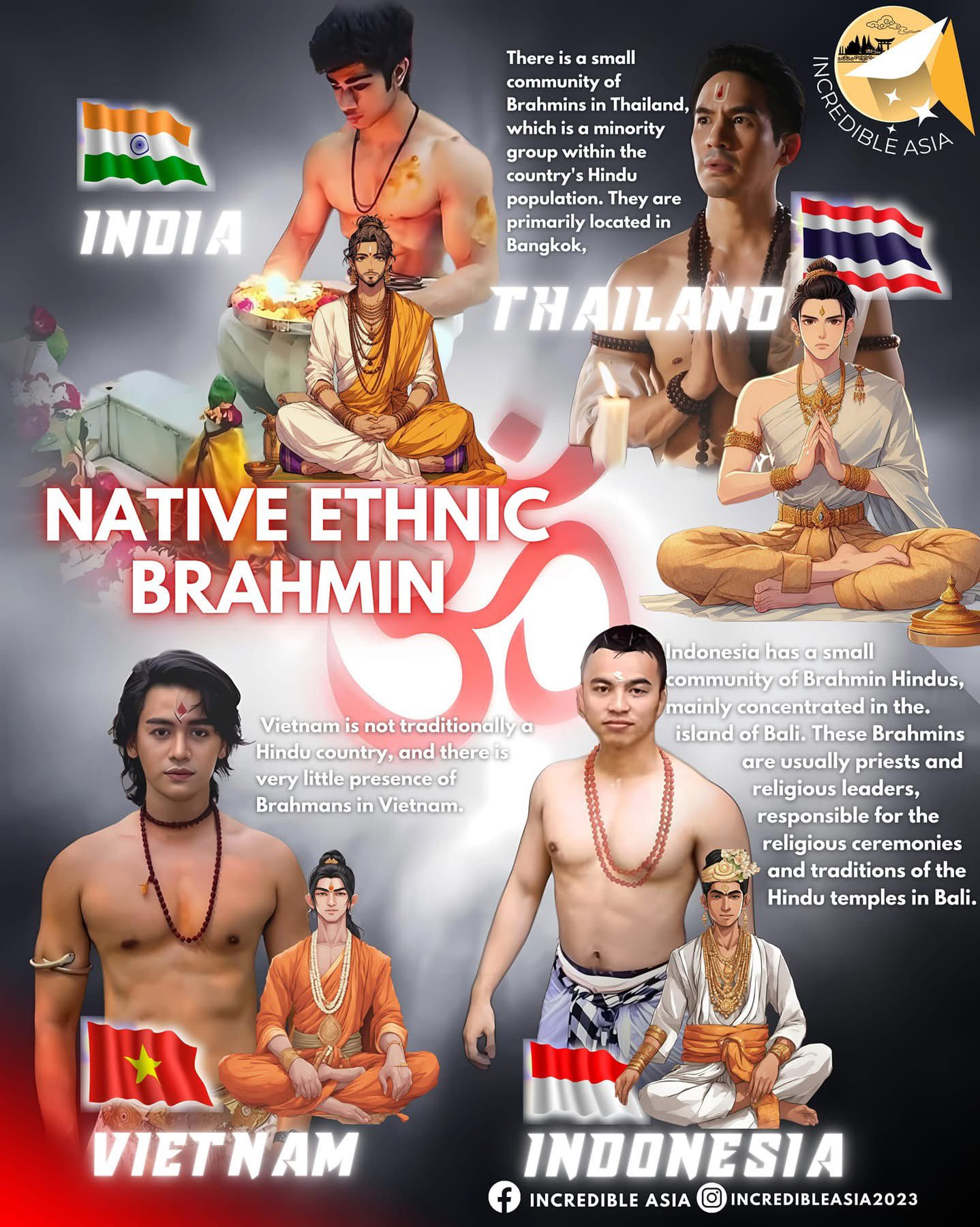
The Brahmin lineage is spread far and beyond, Brahmins were present in Thailand too, and they still conduct the coronation there.
>>84000
Not saying it cant be true but its just a legend at best. Mujeets have similar stories apparently how their community descends from arabs or prophet etc when their genetics clearly show they are natives. These are just legends.
>>84051
read here >>83998
It is scientifically confirmed, not just a legend, even before DNA testing and carbon dating, there were many historical records.
>>84060
Brahmins weren't a monolith. They were divided by community and region. They did their own research and scholarly work and had different patrons which is why you have so many versions of puranas and epics like mahabharat.
>>84061
I don't see his name on sample they got dna from. Is it the cemetry of same person?
Also names can be adopted. Mujeets have arab names and claim syed descent which is all fake when you see they dont even have same haplos. Its cultural adoption and assimilation of identity.
>>84063
It’s an origin myth in common with many kingdoms and states that adopted Hinduism in South east Asia. Some prince or Brahmin from the Hindu heartland came and married the local princess and from them descended the present line of illustrious royal kings. Same story everywhere. Most probably all invented by Brahmin priests to please their patron kings.
Common examples- Bhim married Hidimba, A Rakshas queen and from them descended the Cachari Dynasty in Assam.
Arjun married Chitrangada and from them descended Manipuri kings.
In Buddhist countries, the prince usually comes from Sakya clan of Buddha.
So Burmese kings use to claim descent from ancient Sakya prince who fled the fall of their kingdom and settled in Upper Burma.
Arakan Buddhist Kings also claimed the same