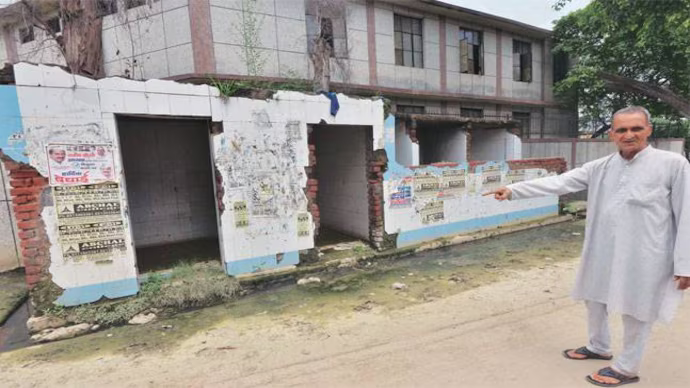
>A villager in Bareilly district of UP admitted that he felt "suffocated inside an enclosed toilet" and couldn't bring himself to excrete until he went to an open field.
>One problem, according to Khalid, was that the government focused on getting the villages to build toilets, but it didn’t consider facility maintenance and sewage management.>“You are supposed to not only construct latrines but also educate people on how to use them, how to maintain them and what happens with the sludge that goes inside the pit,” Khalid said.>A. Kalimuthu, project director at the WASH (Water, Sanitation & Hygiene) Institute, said: “The construction is the easy part.>“We build hundreds of toilets, but the major focus is teaching people that the toilet is not a hardware, it’s a software.”>Caste issues also remain a significant barrier to changing those attitudes. Traditionally it is the lowest caste members whose job it is to clean latrines and sewers – and they are considered “untouchable” by higher castes.>“People don’t want to handle human feces which has traditionally been reserved for a certain category of people in our society – manual scavengers,” Khalid said.>Two children from India’s lowest caste were allegedly beaten to death late last month after defecating in the open, according to authorities. The siblings, ages 12 and 10 respectively, were attacked while defecating on a public street in Bhakhedi village in central India’s Madhya Pradesh state. Defecating in that village is banned, local police deputy superintendent Viren Singh said.>Ultimately, Khalid said, open defecation “is a behavioral issue, not about access” – and focus should move to finding out whether Modi’s campaign has produced real health impacts.